
Most Recent
5G Not Working on Your Phone? How to Fix Network and Settings Problems
Having trouble getting 5G to work on your phone? Several things could be affecting your connection, from limited network coverage and incompatible SIM cards to incorrect settings and power-saving features. This guide explains how to check whether your phone and mobile plan support 5G, enable the network on Android and iPhone, and troubleshoot common connection problem...

Air Tanzania builds a more secure, unified network as it grows across Africa and Asia
As Air Tanzania expands across Africa and Asia, it needs every airport connected through a single interface in order to move faster, gain full visibility, and reduce security risks. The fast-growing East African carrier is rolling out SITA Connect Go across its 15-airport regional network, in addition to its headquarters in Dar es Salaam, the country’s largest city.
Musk companies take key step closer to mega merger
Elon Musk's two public companies have appointed five directors, three from Tesla and two from SpaceX, to guide two special committees handling merger negotiations, the Financial Times reported on Tuesday. The directors are Roelof Botha and Randy Glein from SpaceX and Robyn Denholm, Kathleen Wilson-Thompson and Jack Hartung from Tesla, the report said, citing people familiar with the matter. Musk said on SpaceX's third-quarter earnings call last month that a merger unifying his AI, robotics, EV and aerospace ambitions under a single corporate roof would be "a good idea". He confirmed the companies had formed special committees of independent directors to discuss a union. The special committees have hired advisers who are fine-tuning financial models that will form the basis for their negotiating positions in an all-stock merger, including Morgan Stanley and Goldman Sachs for SpaceX and Evercore for Tesla, the report said. The bankers are studying which parts of the proposed conglomerate overlap, even as a potential combination faces steep regulatory hurdles over SpaceX's US defence contracts and Tesla's reliance on China. Bloomberg reported earlier this month that a deal could be announced as early as December, citing progress in merger negotiations. (Reuters) Edited by Tony Sabine
Huawei passes 100m mark in HarmonyOS takeup
Huawei on Tuesday announced that the number of smartphones, tablets and computers running its self-developed HarmonyOS operating system has exceeded 100 million, marking a major milestone in the company's efforts to build an independent software ecosystem. The figure covers devices running HarmonyOS 5, 6 and 7. The HarmonyOS operating system now offers more than 460,000 applications and services, with over 12 million registered developers, it said. Huawei introduced a new HarmonyOS architecture in October 2024, with the launch of HarmonyOS 5, followed by subsequent updates, versions 6 and 7. The architecture is independent of Google's Android and Apple's iOS, featuring its own operating kernel, programming language and AI framework, all developed without using the Linux kernel or Android open-source code. Operating systems are the foundation of the digital ecosystem, while the number of devices running them is a key factor determining whether an ecosystem can achieve sufficient scale to take root and sustain itself. It took about 25 months for the self-developed HarmonyOS to grow from commercial launch to surpassing the 100-million-devices milestone. Huawei said HarmonyOS applications now cover a wide range of areas, including local services, e-commerce retail, office work, travel and video games. New applications combining innovative technology with real-world use cases have emerged, from high-definition livestreaming with telephoto macro photography to accessibility tools for people with language barriers. More than 14,000 contributors are developing industry-specific innovations on the open-source OpenHarmony operating system, producing over 120 customised versions for sectors such as power, water management and manufacturing. Xia Yubin, director of the OpenHarmony technology club at Shanghai Jiao Tong University, said operating systems have long been dominated by a few foreign companies, and HarmonyOS' surpassing of the 100-million mark means China's foundational software has blazed a path for independent development that can be replicated. More devices and more diverse scenarios lead to a more mature ecosystem, which in turn encourages more companies to invest in underlying technological innovation. Huawei has continued to prioritise research and development. In the first half of 2026, its R&D spending reached a same-period record high of 121.38 billion yuan, up 25.2 percent year on year, according to its semi-annual report, with R&D accounting for 25.94 percent of total revenue. (Xinhua) Edited by Tony Sabine

AI adoption to sustain demand for Indian IT services firms; labour-based models face pressure: Report
India's IT services companies could continue to benefit from the growing adoption of artificial intelligence as businesses require support for integrating AI solutions, managing data and deploying them at scale, even as automation puts pressure on traditional labour-based delivery models, according to a Systematix report.
Motorola Edge 70 Neo Launched in India with Snapdragon 7s Gen 3 Chipset, 7,000mAh battery: Price, Specifications
After several leaks and teasers, Motorola today finally took the wrap off its latest Edge-branded smartphone called the Edge 70 Neo. The Edge 70 Neo is priced joins Motorola’s Edge series of mid-range smartphones and is available in four unique finishes.

Goats drafted in to tame Greenwich Park slope
Bagot goats are used to keep vegetation in check and help preserve the view from the Royal Observatory.

OpenAI and Cisco Unveil AI-Assisted Linux Security Tool to Block Exploits Before Patching
OpenAI and Cisco have teamed up to launch Shirudo (meaning "shield" in Japanese), an open-source Linux runtime that allows artificial intelligence (AI) agents to defend systems without downtime. "It lets agents write dynamic eBPF controls to shield systems from exploits, giving defenders more time to test and roll out patches," OpenAI said in a post on X. The AI upstart called the initiative a

Hackers Exploit N-able MailAssure Flaw While AI Agents Exploit MONAI Label Zero-Day
The U.S. Cybersecurity and Infrastructure Security Agency (CISA) on Monday added two flaws impacting N-able MailAssure and MONAI Label to its Known Exploited Vulnerabilities (KEV) catalog, citing evidence of active exploitation. The critical vulnerabilities are listed below - CVE-2026-134624 (CVSS score: 9.3) - A server-side request forgery (SSRF) vulnerability in N-able MailAssure's LDAP
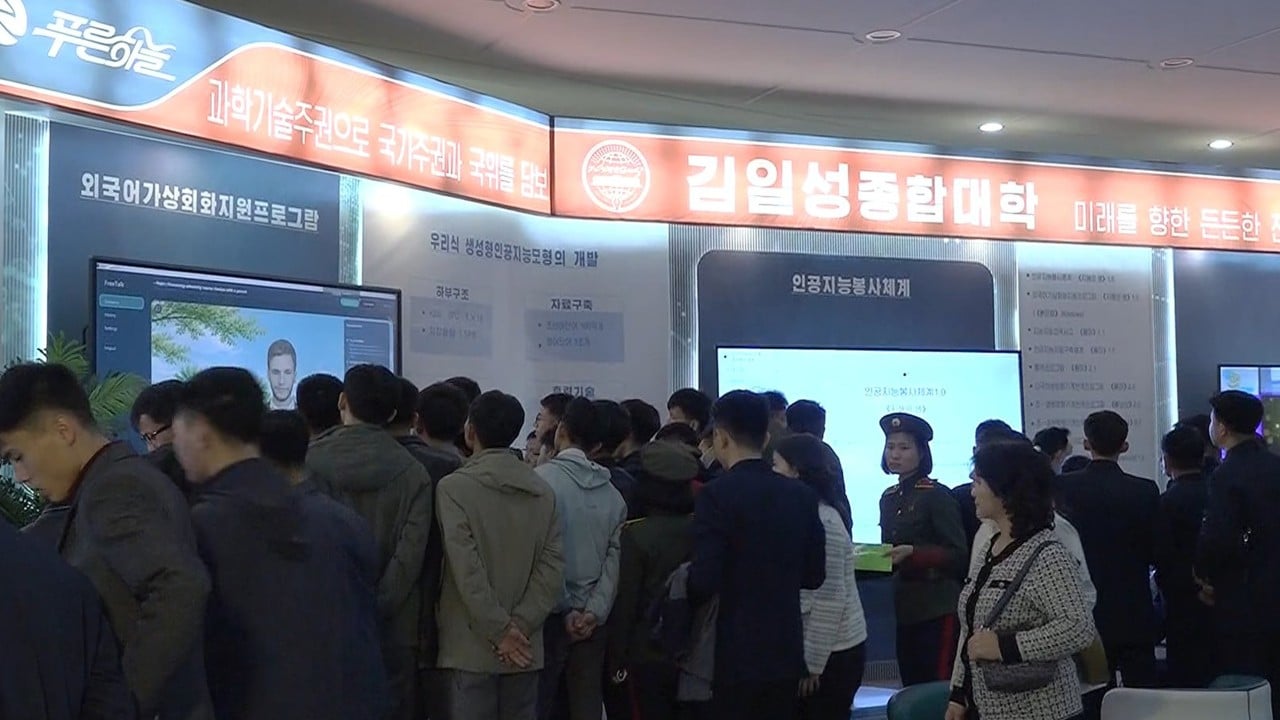
North Korea unveils first AI chatbot, but it won’t answer ‘uncultured questions’
North Korea appears to have unveiled its first domestic artificial intelligence chatbot, according to state television footage analysed by a US-based research programme that monitors the secretive country. Named Fountain of Wisdom, the system was developed by Kim Il-sung University’s AI research institute alongside Phurunhanul Trading, a Pyongyang software developer, according to a report published last week by Martyn Williams, a senior fellow at the Stimson Centre, which runs the 38 North...