
Voting in 20 EU countries under way as elections for the European Parliament enters its final day
Jun 9, 2024
Tens of millions across the European Union were voting in EU parliamentary elections on Sunday in a massive exercise of democracy that is expected to shift the bloc to the right and redirect its future
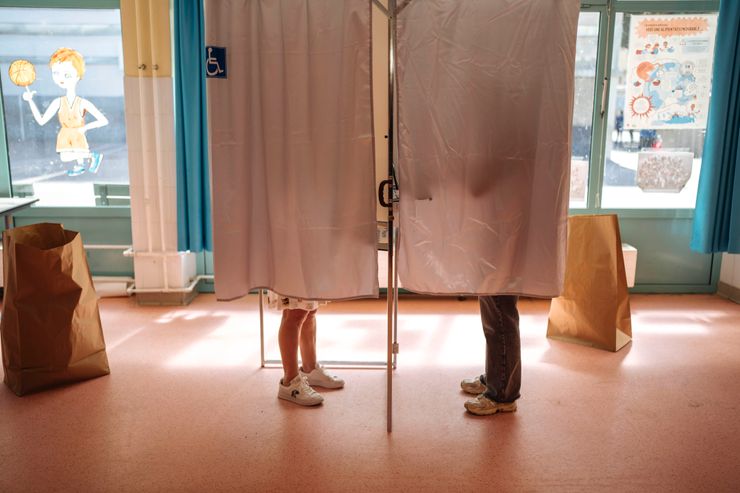
BRUSSELS (AP) — Tens of millions across the European Union voted Sunday in EU parliamentary elections in a massive exercise of democracy that is expected to shift the bloc to the right and redirect its future.
The war in Ukraine, migration, and the impact of climate policy on farmers are some of the issues weighing on voters’ minds as they
cast ballots
to elect 720 members of theEuropean Parliament
.Surveys suggest that mainstream and pro-European parties will retain their majority in parliament, but they will lose seats to hard right parties like those led by Italian Premier Giorgia Meloni, Hungarian leader Viktor Orban, Geert Wilders in the Netherlands and Marine Le Pen in France.
That would make it harder for Europe to pass legislation and could at times paralyze decision-making in the world's biggest trading bloc. “I do hope that we will manage to avoid a shift to the right and that Europe will somehow remain united,” voter Laura Simon said in Berlin.
EU lawmakers have a say in issues from financial rules to climate and agriculture policy. They approve the EU budget, which bankrolls priorities including infrastructure projects, farm subsidies and
aid delivered to Ukraine
. And they hold a veto over the appointment of the powerful EU commission.This elections come at a testing time for voter confidence in a bloc of some 450 million people. Over the last five years, the EU has been
shaken by the coronavirus pandemic
, aneconomic slump
and anenergy crisis
fueled by the biggest land conflict in Europe since the Second World War. But political campaigning often focuses on issues of concern in individual countries rather than on broader European interests.Sunday’s voting marathon winds up a four-day election cycle that began in the Netherlands on Thursday.
An unofficial exit poll there suggested that Wilders’ anti-migrant hard right party would make
important gains
in the Netherlands, even though a coalition of pro-European parties has probably pushed it into second place.Casting his vote in the Flanders region, Belgian Prime Minister Alexander De Croo, whose country holds the EU’s rotating presidency until the end of the month, warned that Europe is “at a crossroads” and “more under pressure than ever.”
Since the last EU election in 2019, populist or far-right parties now lead governments in three nations — Hungary, Slovakia and Italy — and are part of ruling coalitions in others including Sweden, Finland and, soon, the Netherlands. Polls give the populists an advantage in
France
,Belgium,
Austria andItaly
.“Right is good,” Hungarian Prime Minister Viktor Orbán, who leads a stridently nationalist and anti-migrant government, told reporters after casting his ballot. “To go right is always good. Go right!”
After the election comes a period of horse-trading, as political parties reconsider in their places in the continent-wide political alliances that run the European legislature.
The biggest political group — the center-right European People’s Party (EPP) — has moved right during the present elections on issues like security, climate and migration.
Among the most watched questions is whether the
Brothers of Italy
— the governing party of populist Meloni, which has neo-fascist roots — stays in the more hard-line European Conservatives and Reformists group or becomes part of a new hard right group that could form the wake of the elections. Meloni also has the option to work with the EPP.A more worrying scenario for pro-European parties would be if the ECR joins forces with Le Pen’s Identity and Democracy to consolidate hard-right influence.
The second biggest group — the center-left Socialists and Democrats — and the Greens refuse to align themselves with the ECR.
Questions also remain over what group Orbán’s ruling Fidesz party might join. It was previously part of the EPP but was
forced out
in 2021 due to conflicts over its interests and values. The far-right Alternative for Germany was kicked out of the Identity and Democracy group following a string of scandals surrounding its two lead candidates for the European Parliament.The election also ushers in a period of uncertainty as new leaders are chosen at the helm of the European institutions. While lawmakers are jostling over places in alliances, governments will be competing to secure top EU jobs for their national officials.
Chief among them is the presidency of the powerful executive branch, the European Commission, which proposes laws and watches to ensure they are respected. The commission also controls the EU’s purse strings, manages trade and is Europe’s competition watchdog.
Other plum posts are those of European Council president, who chairs summits of presidents and prime ministers, and EU foreign policy chief, the bloc’s top diplomat.
Unofficial estimates are due to trickle in from 1615 GMT. Official results of the polls, which are held every five years, will be begin to be published after the last polling stations in the 27 EU nations close in Italy at 11 p.m. (2100 GMT), but a clear picture of what the new assembly might look like will only emerge clear on Monday.
___
Sylvain Plazy in Brussels and Geir Moulson in Berlin contributed to this report.


